

Your LASIK consultation is the most important appointment in the entire process — more important, in some ways, than the surgery itself. It’s where a surgeon determines whether LASIK is safe and appropriate for your eyes, maps your unique anatomy, answers your questions, and builds a treatment plan around you. It’s also your chance to size up the clinic and decide whether you trust them with your vision.
If you’ve never been through it, the consultation can feel like a mystery. This guide demystifies it completely: what happens, which tests you’ll undergo, how to prepare, what questions to ask, and what you’ll walk away with.
Why the consultation matters so much
LASIK isn’t a one-size-fits-all procedure, and no ethical clinic will confirm your candidacy over the phone or from an online quiz. The consultation exists to answer one honest question: what is the safest, most effective way to correct your vision — and is that LASIK at all?
Sometimes the answer is a confident yes. Sometimes it’s “LASIK isn’t ideal, but PRK, SMILE Pro, or an ICL would suit you beautifully.” And occasionally it’s “let’s wait” or “let’s treat something first.” A thorough consultation protects you from a procedure that isn’t right for you, which is exactly why it deserves your full attention. For the criteria being evaluated, see Am I a Good Candidate for LASIK?
How to prepare before you arrive
A little preparation makes your consultation far more accurate and useful.
- Stop wearing contact lenses beforehand. This is the big one. Contacts temporarily reshape your cornea, which can distort the measurements. Soft lens wearers are typically asked to switch to glasses for several days to a couple of weeks before the appointment; rigid gas-permeable wearers may need longer. Your clinic will give you exact timing — follow it, because accurate measurements depend on it.
- Bring your glasses and prescription history. Records showing a stable prescription help confirm candidacy.
- List your medications and medical conditions. Some affect healing or natural tear production.
- Arrange a ride, just in case. Your eyes may be dilated during testing, which can blur your near vision and make driving uncomfortable for a few hours.
- Write down your questions and goals. Think about your lifestyle: night driving, sports, screen-heavy work. These shape the recommendation.
The tests you’ll undergo
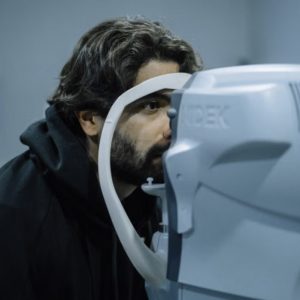
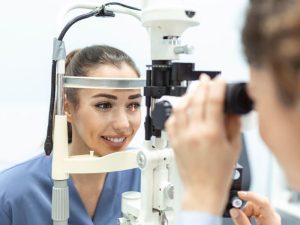
The heart of the consultation is a series of painless diagnostic tests that build a detailed picture of your eyes. You won’t need all of these explained on the day, but knowing them in advance removes the intimidation factor.
Corneal topography and tomography
A scan that maps the precise shape and curvature of your cornea, detecting irregularities such as astigmatism or early signs of conditions that would rule LASIK out.
Corneal thickness measurement (pachymetry)
Because LASIK reshapes the cornea by removing a small amount of tissue, your surgeon needs to confirm you have enough thickness to do so safely. Thinner corneas may point toward a surface procedure like Custom PRK or ICL.
Refraction
A precise measurement of your exact prescription — the foundation of your treatment plan. Your surgeon will also confirm the prescription has been stable.
Dry eye and tear film evaluation
Since dryness is the most common LASIK side effect, screening your tear film beforehand helps predict and manage it — or steer you toward a different procedure if needed.
Pupil size measurement
Large pupils can influence nighttime visual effects like glare and halos, so this is factored into planning.
Dilated eye health exam
Drops widen your pupils so the surgeon can examine the inside of your eye and rule out other conditions. This is what may temporarily blur your near vision afterward.
Meeting the surgeon and getting your answer
Once the measurements are gathered, you’ll discuss the results. This is where a good clinic shines: the doctor should explain, in plain language, whether you’re a candidate, which procedure they recommend and why, what results you can realistically expect, and what the risks are. The American Academy of Ophthalmology’s list of questions to ask when considering LASIK is worth reviewing so you can steer this conversation.
Good questions to ask include:
- Am I a good candidate — and if not, what are my alternatives?
- Which procedure do you recommend for my eyes, and why?
- What technology do you use, and is flap creation blade-free?
- What results can I realistically expect given my prescription?
- What are the specific risks in my case?
- Are follow-up visits and any enhancements included in the price?
- How many of these procedures has the surgeon performed?
Don’t be shy. A trustworthy clinic welcomes questions; a rushed or evasive response is telling.
What you’ll walk away with
By the end of a thorough consultation, you should leave with:
- A clear answer on your candidacy for LASIK or an alternative.
- A recommended procedure tailored to your eyes.
- A transparent, itemized quote, including what’s covered and available financing (see How Much Does LASIK Cost in Calgary?).
- Realistic expectations for results and recovery.
- Answers to your questions — and no pressure to book on the spot.
That last point matters. A reputable clinic gives you the information and lets you decide in your own time. High-pressure sales tactics have no place in a medical decision about your eyes.
How long does it take?
Plan for the consultation to take a couple of hours. The testing itself is efficient, but the dilation, the discussion, and your questions all take time — and they should. This isn’t an appointment to rush. At Clarity Laser Vision in Calgary, the consultation is designed to be genuinely educational, giving you the clarity to make a confident decision. Alberta’s ophthalmologists practise within the standards of the Canadian Ophthalmological Society.
Red flags to watch for during your consultation
A consultation isn’t only about the clinic evaluating you — it’s your chance to evaluate them. Trust your instincts if you notice any of the following:
- Minimal testing before a confident “yes.” Real candidacy requires the full battery of diagnostics described above. A quick approval without thorough mapping is a warning sign.
- Pressure to book on the spot. A reputable clinic gives you the information and the space to decide. Urgency and “today-only” pricing are sales tactics, not medical advice.
- Vague or evasive answers. You deserve clear responses about your candidacy, your surgeon’s experience, the technology used, and what’s included in the price.
- No discussion of alternatives. If LASIK genuinely isn’t ideal for you, a good clinic will say so and explain the options — not push LASIK anyway.
- Unwillingness to disclose the surgeon. You have every right to know who will operate and how experienced they are.
Bring this simple checklist
To get the most from the appointment, arrive with: your current glasses, your prescription history, a list of medications and medical conditions, a note of your visual goals and lifestyle, and your written questions. Having stopped contact lens wear for the period your clinic specified is the single most important preparation step, because everything measured that day depends on accurate corneal readings.
Walking in prepared — and alert to red flags — turns your consultation into a genuine decision-making session rather than a sales pitch.
Consider bringing a companion
It’s often worth bringing a partner or friend to your consultation. A second set of ears helps you remember the details discussed, and if your eyes are dilated during testing, you’ll appreciate having a ride home. Some patients also find it reassuring to have someone to talk the decision through with afterward. Remember there’s no obligation to decide anything on the day, so treat the appointment as information-gathering — the goal is to leave informed, not committed.
Frequently asked questions
Do I need to stop wearing contacts before my consultation? Yes. Contacts reshape the cornea, so you’ll be asked to switch to glasses for a set period beforehand to ensure accurate measurements. Your clinic will tell you exactly how long.
Will my eyes be dilated? Often, yes. Dilation lets the surgeon examine your eye thoroughly and may temporarily blur your near vision, so it’s wise to arrange a ride.
Is the consultation painful? No. The diagnostic tests are painless, though dilation drops can cause temporary light sensitivity and blurred near vision.
Will I have to decide on the day? No. A reputable clinic gives you the information and lets you take your time. There should be no pressure to commit immediately.
What if I’m told I’m not a LASIK candidate? You’ll be guided toward alternatives such as PRK, SMILE Pro, ICL, RLE, or LAL, depending on what suits your eyes.
Book your LASIK consultation in Calgary
The consultation is the first, most important step toward clearer vision — and there’s no obligation attached. Book your assessment with Clarity Laser Vision in Calgary and get honest, personalized answers about whether LASIK is right for you.
This article is for general educational purposes and does not constitute medical advice. Only a qualified eye surgeon can determine the right procedure for you after a complete examination.