

LASIK vs. SBK: Which Is Right for You?
When you start researching laser eye surgery in Calgary, you quickly run into an alphabet soup of acronyms — LASIK, SBK, PRK, SMILE. Two of the terms you will see most often are LASIK and SBK, and because they are closely related, it is easy to get confused about how they actually differ. Are they competing procedures? Is one newer or safer than the other? And more importantly: which one is right for your eyes?
This guide clears up the confusion. We will explain what SBK is, how it relates to traditional LASIK, where the two approaches differ, and how our surgeons at Clarity Laser Vision decide which is the better fit for each patient.
First, a quick refresher on LASIK
LASIK — Laser-Assisted In Situ Keratomileusis — is the procedure most people picture when they think of laser eye surgery. It works by creating a thin, hinged flap in the cornea, folding it back, using an excimer laser to reshape the tissue underneath, and then repositioning the flap so it heals naturally. If you would like a full walkthrough of the basics, start with our guide, What Is LASIK Eye Surgery?
The key variable in any flap-based procedure is the thickness and precision of the flap — and that is exactly where SBK enters the picture.
So what is SBK?
SBK stands for Sub-Bowman’s Keratomileusis. Rather than being a completely different surgery, SBK is best understood as a refined, thin-flap evolution of LASIK. The name refers to Bowman’s layer — a strong, structural layer within the cornea. SBK creates a thinner flap that sits just beneath this layer, preserving more of the cornea’s underlying structural tissue.
In other words:
- Traditional LASIK creates a flap of a certain thickness.
- SBK creates a noticeably thinner, more uniform flap, leaving more residual corneal tissue intact.
Because the two share the same fundamental principle — lift a flap, reshape the cornea, replace the flap — SBK is frequently described as “thin-flap LASIK.” Many modern clinics, including those using advanced femtosecond (blade-free) laser platforms, effectively perform SBK-style thin-flap procedures as their standard LASIK.
The key differences between LASIK and SBK
Let’s break down where these two approaches diverge in ways that matter to patients.
Flap thickness and preserved tissue
This is the headline difference. A thinner SBK flap preserves more of the deeper corneal tissue, which can be an advantage for two reasons: it may make treatment possible for some patients with slightly thinner corneas, and preserving structural tissue is generally desirable for long-term corneal stability. If corneal thickness is a concern for you, this is worth discussing in detail at your consultation. Our article Why PRK May Be the Better Choice for Thin Corneas covers a related scenario.
Blade vs. blade-free
Older LASIK relied on a mechanical oscillating blade (a microkeratome) to create the flap. SBK and modern LASIK increasingly use a femtosecond laser, which creates the flap with light pulses instead of a blade. This “all-laser” or “blade-free” approach improves the precision and consistency of the flap. Our article Blade-Free LASIK: How SBK Technology Improves Results goes deeper on this technology.
Precision and predictability
Because SBK flaps tend to be thinner and more uniform, they can offer greater predictability. Consistency in flap creation is one of the factors surgeons value most, since it contributes to reliable, repeatable outcomes.
Recovery and results
For most patients, the recovery experience of SBK and standard LASIK is similar: rapid visual improvement, usually within a day, with minor dryness or nighttime glare that settles over the following weeks. Both are flap-based procedures, so they share the fast-healing advantage that makes LASIK-family surgery so appealing. You can see what that looks like in our LASIK recovery timeline.
LASIK vs. SBK: a side-by-side summary
|
Factor |
Traditional LASIK |
SBK (thin-flap) |
|---|---|---|
| Core principle | Flap + laser reshaping | Flap + laser reshaping |
| Flap thickness | Standard | Thinner, more uniform |
| Preserved corneal tissue | Less | More |
| Flap creation | Blade or laser | Typically femtosecond laser |
| Recovery speed | Fast | Fast |
| Suitability for thinner corneas | More limited | Potentially broader |
The most important thing to understand from this table is that SBK is not a rival to LASIK — it is a refinement of it. The choice is rarely “LASIK or SBK” in the abstract; it is about which flap approach best suits your individual corneal measurements.
How safe are these procedures?
Both LASIK and SBK have strong safety records when patients are properly screened. The American Academy of Ophthalmology notes that reviews of hundreds of peer-reviewed studies have found that around 95% of LASIK patients are satisfied with their outcomes. As with any elective surgery, there are risks — most commonly temporary dry eye and nighttime visual effects — which is why careful candidacy assessment is essential. The U.S. FDA’s LASIK resource hub is a good neutral source for understanding both benefits and potential side effects, and in Canada the Canadian Ophthalmological Society provides evidence-based guidance on refractive surgery.
Which one is right for you?
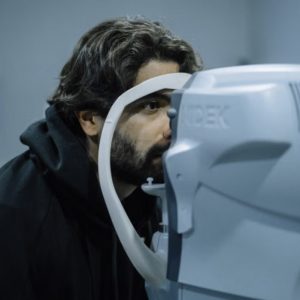
Here is the honest answer: you can’t decide this from a blog post — and neither can any clinic that hasn’t examined your eyes. The right choice depends on measurements that can only be gathered in person, including:
- Your corneal thickness and shape (topography).
- The strength of your prescription and whether it includes astigmatism.
- Your tear film and dry-eye status.
- Your pupil size and how your eyes perform in low light.
- Your lifestyle, occupation, and visual goals.
A patient with ample corneal thickness and a moderate prescription may be an excellent candidate for either approach. A patient with slightly thinner corneas may be steered toward SBK’s thinner flap — or, in some cases, toward a surface procedure like Custom PRK or a lens-based option such as ICL entirely. This is why we always recommend an assessment rather than a rushed decision.
Why the Clarity Laser Vision approach matters
At Clarity Laser Vision in Calgary, we don’t start with a procedure and try to fit you to it. We start with your eyes. Our diagnostic process maps your cornea in detail and considers your whole visual profile before we recommend LASIK, SBK-style thin-flap treatment, or an alternative. That means you get a recommendation built around your anatomy and goals — not a one-size-fits-all pitch. For a wider view of everything available to you locally, see our complete guide to vision correction options in Calgary.
Three real-world scenarios
Sometimes the clearest way to understand the LASIK-vs-SBK question is to see how it plays out for different patients. These composites illustrate how corneal measurements — not marketing — drive the decision.
The straightforward candidate. A 32-year-old with moderate nearsightedness, no astigmatism, ample corneal thickness, and a healthy tear film. This patient is a strong candidate for either standard LASIK or an SBK-style thin-flap procedure, and the surgeon may simply use the practice’s most advanced blade-free platform as the default. The decision here is low-stakes because the anatomy is generous.
The borderline-thickness candidate. A 28-year-old with a slightly stronger prescription and corneas on the thinner side of average. Here, a thinner SBK flap can be the deciding factor that preserves enough residual corneal tissue to make flap-based surgery safe. If the numbers are still too tight, the surgeon may recommend a surface procedure such as Custom PRK instead — no flap at all.
The dry-eye-prone candidate. A 40-year-old who already notices occasional dryness. Because any flap-based procedure can temporarily affect the tear film, the surgeon might treat the dryness first, lean toward a minimally invasive option like SMILE Pro, or proceed with careful monitoring. Flap thickness is only one part of a bigger picture.
The lesson across all three: the LASIK-versus-SBK choice is never made in isolation. It’s one variable in a complete assessment of your eyes, alongside your prescription, tear film, pupil size, and lifestyle.
Frequently asked questions
Is SBK better than LASIK? SBK isn’t universally “better” — it’s a thinner-flap refinement of LASIK that can be advantageous for certain patients, particularly those where preserving corneal tissue is a priority. The best option depends on your individual eyes.
Is SBK the same as blade-free LASIK? They overlap. Blade-free (femtosecond) technology is the method of creating the flap; SBK describes creating a specifically thin flap. Many blade-free LASIK procedures are performed in an SBK-style thin-flap fashion.
Does recovery differ between LASIK and SBK? For most patients, recovery is very similar — quick visual improvement within about a day, with minor dryness or glare that resolves over the following weeks.
What if I’m not a candidate for either? You have excellent alternatives, including PRK, SMILE Pro, and lens-based procedures like ICL or RLE. A consultation will identify the right path.
Take the next step
The difference between LASIK and SBK is a detail your surgeon should tailor to your eyes — not a decision you should stress over alone. Book a consultation with Clarity Laser Vision in Calgary, and we will measure, explain, and recommend the approach that gives you the best possible result.
This article is for general educational purposes and does not constitute medical advice. Only a qualified eye surgeon can determine the right procedure for you after a complete examination.