

LASIK has helped millions of people reduce or eliminate their reliance on glasses and contact lenses — but here is a truth that many clinics gloss over: LASIK is not right for everyone. And that is a good thing. The remarkable safety and satisfaction record LASIK enjoys is built in large part on careful patient selection. In other words, the reason so many people love their results is precisely because responsible surgeons decline to operate on those who aren’t suitable.
So the real question isn’t just “does LASIK work?” — it’s “is LASIK right for me?” This guide walks through the factors that make someone a strong LASIK candidate, the situations that call for caution or an alternative procedure, and how to find out for certain.
The core requirements for LASIK candidacy
While only a full eye examination can give you a definitive answer, most good LASIK candidates share a common set of characteristics.
1. You are old enough — and your prescription is stable
Most surgeons require patients to be at least 18, and often prefer the early-to-mid twenties or older. The reason is prescription stability. Your eyes can continue changing through your late teens and early twenties, and LASIK corrects the prescription you have now. If that prescription is still shifting, your results could drift over time.
As a general rule, your prescription should have been stable for at least 12 months before surgery. If you’ve recently changed glasses or contacts significantly, your surgeon may want to wait.
2. Your prescription falls within a treatable range
LASIK can correct nearsightedness, farsightedness, and astigmatism across a wide range — but not an unlimited one. Very high prescriptions may exceed what LASIK can safely achieve, in which case a lens-based option such as an Implantable Collamer Lens (ICL) may be a better route. Curious whether astigmatism disqualifies you? It usually doesn’t — see LASIK for Astigmatism: Does It Work?
3. You have healthy, thick-enough corneas
Because LASIK reshapes the cornea by removing a small amount of tissue, you need sufficient corneal thickness to begin with. Patients with thinner corneas aren’t necessarily out of options — they may be excellent candidates for a surface procedure like Custom PRK, which we discuss in Why PRK May Be the Better Choice for Thin Corneas. Corneal shape matters too: certain irregularities, such as keratoconus, are contraindications for LASIK.
4. Your eyes are generally healthy
Conditions such as significant dry eye, uncontrolled glaucoma, cataracts, or active eye infections and inflammation need to be addressed — or may make LASIK inadvisable. Dry eye in particular is worth screening carefully, since LASIK can temporarily worsen it.
5. You are in good general health
Some systemic conditions influence healing and candidacy. Well-controlled diabetes is often fine; poorly controlled diabetes or certain autoimmune conditions may complicate healing. Being open about your full medical history helps your surgeon keep you safe.
Situations that call for caution or a different approach
Being told LASIK isn’t ideal for you is not a dead end — it usually just means a different procedure fits you better. Here are common scenarios.
Pregnancy and breastfeeding
Hormonal changes during pregnancy and breastfeeding can temporarily shift your prescription and affect your tear film. Most surgeons recommend waiting until after you’ve finished breastfeeding and your vision has stabilized.
Severe dry eye
If you already struggle with significant dry eye, LASIK may aggravate it. Depending on the severity, your surgeon might treat the dry eye first, recommend a procedure less associated with dryness such as SMILE Pro, or suggest an alternative.
Very high prescriptions or thin corneas
As noted above, these are classic cases where ICL or PRK may outperform LASIK for your specific eyes.
Age-related changes
If you’re over 45 and starting to notice difficulty with near vision (presbyopia), LASIK alone may not address the whole picture. Lens-based procedures like Refractive Lens Exchange (RLE) or the Light Adjustable Lens (LAL) are often better suited to aging eyes. See Vision Correction After 40 for a fuller discussion.
Unrealistic expectations
This one is about mindset, not anatomy. LASIK dramatically reduces dependence on glasses for most patients, but it cannot guarantee “perfect” vision in every situation, and it does not stop your eyes from aging. Candidates who understand what the procedure can and cannot do tend to be the most satisfied. The U.S. FDA’s LASIK information hub is a good neutral resource for setting realistic expectations.
How candidacy is actually determined
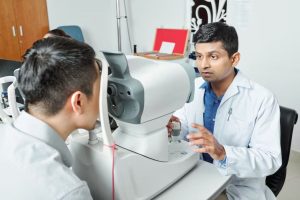
You cannot self-diagnose LASIK candidacy from a checklist, and no honest clinic will confirm it over the phone. Determining suitability requires a comprehensive assessment, which typically includes:
- Corneal mapping (topography) to measure the shape and detect irregularities.
- Corneal thickness measurement (pachymetry).
- A full refraction to confirm your exact, stable prescription.
- Dry eye and tear film evaluation.
- Pupil size measurement, since large pupils can influence nighttime vision.
- A general eye health exam to rule out other conditions.
This is where a thorough clinic earns its reputation. At Clarity Laser Vision, the assessment is designed to answer one question honestly: what is the safest, most effective procedure for your eyes — even if that turns out not to be LASIK. Alberta’s eye surgeons operate within the standards of the Canadian Ophthalmological Society, reflecting a strong, evidence-based approach to candidacy.
How to prepare for your candidacy assessment
A little preparation makes your consultation more accurate and more useful. Here’s how to get the most out of it:
- Stop wearing contact lenses beforehand. Contacts temporarily reshape the cornea, which can skew your measurements. Soft lens wearers are often asked to switch to glasses for several days to a couple of weeks before testing; rigid gas-permeable lens wearers may need longer. Your clinic will give you exact timing.
- Bring your prescription history. Records showing your prescription has been stable help confirm candidacy. If you’ve had recent significant changes, mention them.
- List your medications and medical conditions. Some systemic conditions and medications affect healing or tear production, so full disclosure keeps you safe.
- Note your visual goals and lifestyle. Do you drive at night often? Play contact sports? Work long hours at a screen? These details shape which procedure fits best.
- Come with questions. Write down anything you want to ask so nothing gets forgotten in the moment.
Arriving prepared turns your assessment from a simple pass/fail into a genuine planning session for your vision.
If LASIK isn’t right for you: your alternatives at a glance
Being told LASIK isn’t ideal is rarely the end of the road. Calgary patients have more vision-correction options than ever, and one of them is very likely a fit:
- Custom PRK / TransPRK — a flap-free surface procedure ideal for thinner corneas or very active lifestyles.
- SMILE Pro — a minimally invasive laser option performed through a tiny incision, often gentler on the tear film.
- Implantable Collamer Lens (ICL) — a lens placed inside the eye, excellent for high prescriptions where laser surgery is limited.
- Refractive Lens Exchange (RLE) — replaces the eye’s natural lens, well suited to patients over 45 addressing presbyopia.
- Light Adjustable Lens (LAL) — a lens whose power can be fine-tuned with light after surgery for a highly customized result.
The point is simple: the goal was never to have LASIK specifically — it’s to see clearly with the procedure that suits your eyes. A consultation matches you to the right one.
A quick self-check (not a substitute for an exam)
You may be a promising LASIK candidate if you can say “yes” to most of the following:
- I’m at least 18, and ideally in my twenties or older.
- My prescription has been stable for about a year.
- I don’t have severe dry eye or a diagnosed corneal disease.
- I’m not currently pregnant or breastfeeding.
- I’m in reasonably good general health.
- I understand what LASIK can and cannot do.
If several of these don’t apply to you, don’t be discouraged — it simply means a consultation should explore which procedure fits best. Remember, the American Academy of Ophthalmology emphasizes that while most patients are good candidates, LASIK is not for everyone, which is exactly why a professional assessment matters.
Frequently asked questions
Can I get LASIK if I have astigmatism? Usually yes. Modern LASIK corrects astigmatism well within a treatable range. A consultation confirms whether your specific case qualifies.
I was told my corneas are too thin. Am I out of options? Not at all. Thin corneas often point toward PRK or an ICL, both of which can deliver excellent results.
Is there an age limit for LASIK? There’s a minimum (generally 18), but no strict maximum. However, older patients dealing with presbyopia or early cataracts may be better served by a lens-based procedure.
Does dry eye disqualify me? Not automatically. Mild dry eye can often be managed. Severe dry eye may point toward a different procedure or require treatment first.
How do I know for sure? Book a comprehensive assessment. It’s the only way to get a definitive, personalized answer.
Find out if you’re a candidate
You don’t have to wonder. A single consultation can tell you whether LASIK is right for you — or point you toward the procedure that is. Book your assessment with Clarity Laser Vision in Calgary and get a clear, honest answer built around your eyes.
This article is for general educational purposes and does not constitute medical advice. Only a qualified eye surgeon can determine your candidacy after a complete examination.