
Choosing to correct your vision is a significant decision that impacts your daily quality of life.
For many individuals seeking long-term freedom from glasses or contact lenses, TSA PRK treatment in Calgary has emerged as a state-of-the-art alternative to traditional laser surgeries.
While many people are familiar with LASIK, TSA PRK represents the next evolution in surface-based vision correction.
This advanced procedure offers a “no-cut” approach, making it an appealing option for patients with active lifestyles or those who have been told their corneas are too thin for other methods.
What Is TSA PRK, And Why Is It Unique?
The TSA PRK acronym stands for Touchless Surface Ablation Photorefractive Keratectomy.
Unlike traditional methods that require a surgical blade or a laser to cut a corneal flap, this procedure is entirely non-invasive.
It is often referred to as a “touchless” surgery because no surgical instruments ever make physical contact with the eye.
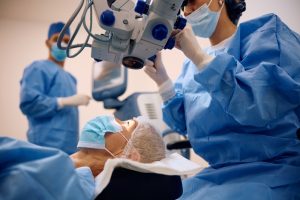
Instead, a sophisticated excimer laser is used to perform the entire treatment, offering a level of precision and safety that was previously unattainable.
How Does TSA PRK Work For Vision Correction?
To understand how does TSA PRK works, it helps to look at the anatomy of the eye. The procedure focuses on the cornea, which is the clear front surface of the eye. In a standard PRK procedure, the surgeon manually removes the outer layer of the cornea (the epithelium).
However, with this advanced version, the laser itself removes this layer and reshapes the underlying tissue in a single, continuous step.
By altering the cornea’s curvature, the laser accurately focuses light on the retina, correcting nearsightedness, farsightedness, and astigmatism without the need for a flap.
What Is The Science Behind Touchless Surface Ablation?
The core technology behind this procedure is Touchless Surface Ablation. This method uses advanced eye-tracking technology that tracks your eye movements thousands of times per second.
This ensures that the laser energy is delivered with extreme accuracy, even if your eye makes tiny, involuntary movements. Because there is no mechanical scraping or cutting, the biological “trauma” to the eye is minimized.
This leads to a more uniform healing process and reduces the risk of long-term complications associated with corneal flaps, such as flap displacement or dry eye syndrome.
How Do You Find An Eye Surgeon For This Procedure?
Selecting the right professional is the most critical step in your vision journey. When looking for an eye surgeon in Calgary, you should prioritize clinics that specialize in surface-based ablation techniques.
A qualified specialist will perform a series of detailed diagnostic tests to map your eye’s unique topography. This “fingerprint” of your vision allows the surgeon to customize the laser parameters to your specific needs.
During your consultation, they will explain the healing timeline and set realistic expectations for your visual outcome.
Why Should You Choose An Eye Clinic For Tsa Prk Treatment?
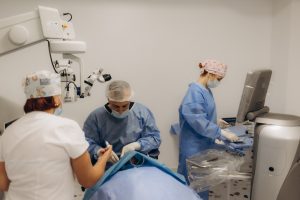
Undergoing surgery in a dedicated eye clinic for TSA PRK treatment provides access to specialized equipment that general surgical centers may not possess.
These clinics are designed to maintain the perfect environmental conditions, such as humidity and temperature control, that are essential for the excimer laser to perform at its peak.
Furthermore, the staff in these specialized facilities are highly trained in post-operative surface care, providing you with guidance on using protective contact lenses and medicated drops during the initial days of epithelial regeneration.
Is It Easy To Find A TSA PRK Near You?
If you are currently researching TSA PRK near you, you are likely seeking a balance between clinical excellence and convenience.
Local accessibility is important because this procedure requires a few follow-up visits during the first week to monitor the regrowth of the corneal outer layer.
Having a clinic nearby ensures that your surgeon can monitor epithelial healing and appropriately manage your comfort. Modern laser centers are now more accessible than ever, bringing world-class technology to local communities.
How Do You Select An Eye Surgeon For A Consultation?
Before committing to surgery, it is vital to meet with an eye surgeon near you to discuss your medical history. Not every eye is a candidate for every procedure.
For example, patients with very high prescriptions or certain autoimmune conditions might require a modified approach.
During a one-on-one consultation, the surgeon will measure your corneal thickness and pupil size to confirm that a surface-based treatment is the safest route for your ocular health. This personalized assessment is what differentiates a successful clinical outcome.
Vision Correction Comparison
| Feature | TSA PRK | Traditional LASIK |
| Flap Creation | No (Touchless) | Yes (Laser or Blade) |
| Contact with Eye | None | Surgical Instruments |
| Corneal Thickness | Suitable for thin corneas | Requires thicker corneas |
| Activity Level | Best for contact sports | Caution required |
| Recovery Time | 3–5 days for surface | 24 hours for surface |
A Clearer Future for Your Vision
Advanced laser vision technology offers a safe, touchless way to reduce dependence on corrective lenses while preserving the eye’s natural structure.
Understanding the healing process helps ensure you achieve a confident shift toward a clear vision.
At Clarity Laser Vision, we combine advanced technology with personalized care to deliver results that suit our needs. If you’re ready to explore your options, contact us today to book your consultation and see if this treatment is right for you.
FAQs
Does the TSA PRK procedure hurt?
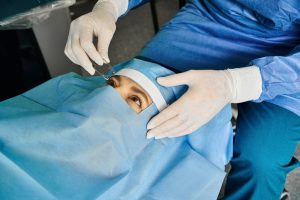
The eye is thoroughly numbed with anesthetic drops before the laser begins; you will not feel pain during the surgery, though you may feel slight pressure.
How long does it take for vision to stabilize?
While you notice improvement within a week, it can take several weeks for vision to become crisp as the new surface layer smooths out completely.
Can I drive home after the surgery?
No, your vision will be blurry and you may be light-sensitive, so a pre-arranged driver must take you home safely after the procedure.
What happens if I move my eye during the laser treatment?
The laser system uses a sophisticated 7D eye tracker that follows subtle movements and automatically pauses if your eye leaves the safety zone.