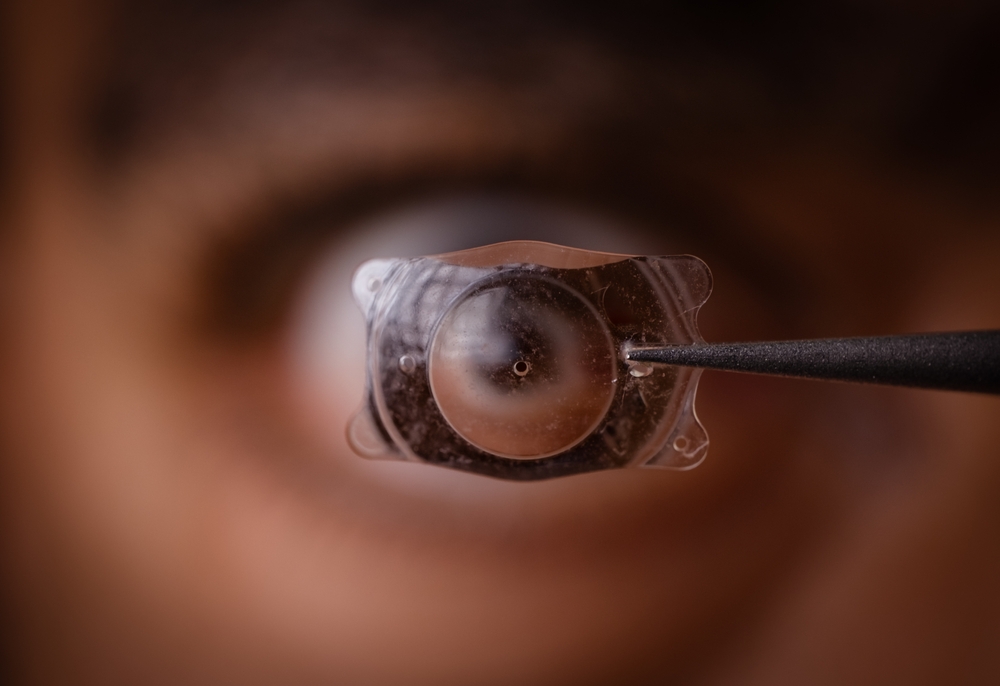
If glasses and contacts no longer fit your lifestyle, an advanced vision-correcting option called Implantable Collamer Lens (ICL) may be the solution you’re looking for.
Unlike LASIK, ICL does not remove corneal tissue; instead, it places a micro-thin lens inside your eye to sharpen vision with remarkable precision.
This treatment is popular among patients who want to reverse, comfortable and a long-term vision correction option.
How ICL Works
Understanding the technology helps patients feel more confident in their decision. Here’s a clear, step-by-step explanation of how the
Implantable Collamer Lens (ICL) work in the eye:
- A soft, biocompatible lens is inserted behind the iris and in front of the natural lens.
- It works with, not against, your existing eye structure.
- The lens is invisible to others and stays in place without maintenance.
- Light entering the eye is focused more accurately, sharpening vision.
This technology is especially helpful for high prescriptions, thin corneas, or patients who are not candidates for LASIK.
What Happens During ICL Treatment?
To understand the treatment flow, here’s what happens during Implantable Collamer Lens treatment:
- Pre-surgical testing – Measurements, corneal mapping, and pupil size evaluation.
- Lens customization – The lens is custom-made to match your eye.
- The procedure – A tiny incision is made, and the lens is placed gently behind the iris.
- Recovery – Most patients notice clearer vision within 24–48 hours.
The procedure is quick, painless, and stitch-free.
When Is ICL Recommended?
This procedure is often recommended for:
- High levels of myopia
- Thin or irregular corneas
- Patients who want a reversible option
- Dry eye sufferers who cannot tolerate LASIK
Patients seeking ICL near you often choose it for its stability and long-term clarity.
ICL vs. LASIK
| Feature | ICL | LASIK |
| Reversible? | Yes | No |
| Suitable for thin corneas? | Yes | Limited |
| Dry eye risk | Low | Moderate |
| Recovery time | 1–2 days | 1–2 days |
| High prescriptions | Excellent | Limited |
Understanding the Cost of ICL Treatment
While talking about the cost of ICL eye treatment, there are several factors that can impact your pricing:
- Type of lens used
- Diagnostic technology
- Surgeon expertise
- Follow-up care included
Although ICL is more expensive than LASIK, patients often see it as a long-term investment in crisp, stable vision, especially for those with higher prescriptions.
Recovery and Aftercare Tips
Proper care supports faster healing and long-lasting results:
- Use prescribed eye drops as directed
- Avoid rubbing your eyes
- Wear protective shields at night for the first week
- Attend all follow-up appointments with an eye doctor in Calgary
Most patients return to normal activities within a few days.
Choosing the Right Specialist Matters
Finding an experienced eye surgeon near you ensures safer treatment, accurate lens sizing, and predictable results.
Always look for clinics that specialize in Implantable Collamer Lens treatment in Calgary and use advanced imaging tools for precise planning.
A Life-Changing Vision Upgrade
ICL offers several patients the freedom to experience crisp vision without any glasses, contact lenses or laser reshaping.
If you’re considering this advanced treatment, Clarity Laser Vision can guide you through the process with expert evaluation and modern technology.
Book or visit our team to plan your appointment today.
FAQs
- Is ICL surgery painful?
No, the procedure is done with numbing drops, so most patients feel only slight pressure during the lens placement.
- How long does an ICL last?
The lens is designed to last a lifetime, and most patients never need it replaced unless their prescription changes significantly.
- Is the ICL visible to others?
No, once placed behind the iris, the lens is completely invisible from the outside.
- How soon can I see clearly after ICL surgery?
Many patients experience sharper vision within 24 hours, with clarity improving steadily over the first week.